The comparative difficulty of the Statement of Work.
HR and Procurement are both on a quest to acquire time from people to do things. One is managed via HR's job description (JD) and employment contract, and the other via Procurement or Contract's Statements of Work (SoW).
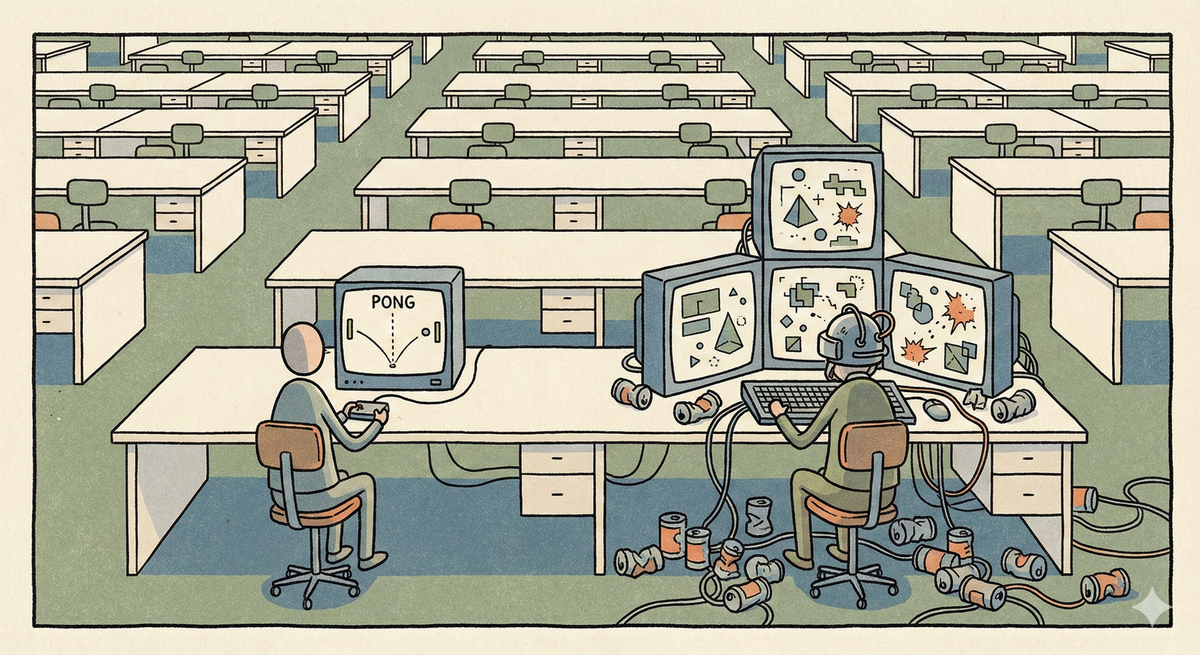
If I have approval to hire a person for $100k a year, I use a standard job title and an approved employment contract. There are only a handful of fields: {name}, {start date}, {title}, {salary}, {signatures}. Signed. Done.
If I have approval to spend $100k on a service, I face a gauntlet of legal terms, liability clauses, IP ownership provisions, termination rights, indemnities, insurance requirements, and SLAs. Scope. Out of Scope. Deliverables. Payment Terms. There is no standard. Everything is hard.
One contract assumes trust and builds a relationship; the other assumes dispute and builds a fortress.
Mary and I sat down for a chat. The world of employment contracts, particularly in structured organisations, is one of discipline. As Mary says, for many -1 Executive roles the contract is almost a formality: "You pull from the template, the terms are standard, the candidate and client have agreed them, and you're signing someone up in days, not weeks."
The world of services contracts is often the Wild West by comparison. Jamie says: "imagine if every employment contract was negotiated from scratch by the candidate's lawyer. That's the equivalent of what we do with every supplier."
When it comes to services, both parties arrive with their own paper. The supplier's terms are designed to limit their liability; the buyer's terms are designed to maximise it. The supplier's scope is from their sales pitch. The client's perception of the scope is only as good as the procurement professional's experience. The result is weeks of redlining, escalations to legal, and protracted negotiations over clauses that may never be invoked.
This is a colossal inefficiency and a source of significant risk. The discipline and simplicity of HR's employment contract offer a clear lesson for Procurement. By developing a library of pre-negotiated 'themes', and associated legal mechanisms, Procurement could move from being reactive legal brokers to enablers of speed.
What is a theme?
There are only so many ways you can buy 'advice' or 'benchmarking' or 'analysis' or a range of other business verbs. Master Service Agreements and the template Statements of Work are designed around who is delivering, not 'what' is being delivered.
- 99% of advice follows the same flow and structure
- 95% of data cleansing activities follow the same delivery structure
- 90% of benchmark reports are the same - literally the same structure
- 80% of time and materials consulting have the same schema or architecture
It's time for procurement to stop keeping these open ended Statements of Work that just add grit in an already complex system
We think that the goal should be to make buying a $100k service as contractually simple as hiring a $100k employee. The employment contract is designed for velocity; the services contract must learn the same language.